
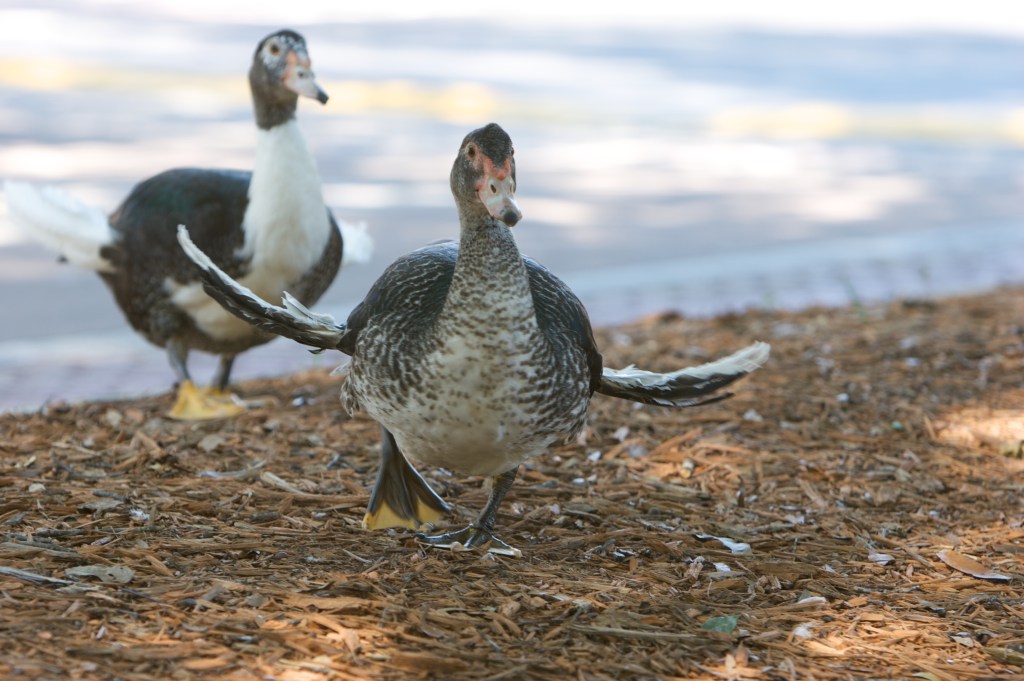
What options do you have for treating it?
Angel wing is a syndrome that can effect waterfowl. It happens in younger birds when they have a high-calorie diet, especially in diets that are high in Protein and Carbs. It can also be the result of Vitamin D and Vitamin E deficiencies. It is also genetic. Young from parents that have or had angel wing will have a higher chance of developing it. Angel wing will cause the last joint to twist outwards and away from the body. It can effect one wing or both. Do not confuse it with droopy wings.
Droopy wings are usually a result of the added weight of adult feathers making the wings hang low. Up and outwards is Angel Wing. Down and low is droopy wing.
Angel wing is not painful. It is more of a cosmetic issue then anything. It will render your birds flightless, but most domestic waterfowl already are. You would also need to keep and eye on them to make sure they don’t snag them on anything.
Angel wing can be corrected while your birds are still young. Once they have reached adulthood, it is permanent. Some people believe molting can fix it, but this is not true. It is a bone/joint issue and not a feather issue. In order to fix it you need to wrap the wings to hold them in place. This will cause the bones/joint to correct themselves. There are several ways to wrap it. With my call ducks, I usually cut off the top of a sock and slide it down. You can also wrap it with vet-wrap or medical wrap. I will leave mine wrapped for 2 days. This may be long enough to fix the issue, but if it is still there, reapply for a couple more days. It may also help to lower your babies Protein and give them some extra D and E Vitamins.

As previously mentioned, if you have no issues with how it makes your birds look, you do not have to correct it. The wrapping process will definitely be annoying to them . You may need an extra set of hands. I am often alone doing this and will utilize a towel to help keep my duck or goose from trying to escape.
Flying may help to save them from some predators, and I don’t want them to lose that ability. With less severe cases of the angel wing, the bird may still be able to fly.

 Caring for your Flock
Leave a comment