The German “Ranger” Duck
The Abacot Ranger is a striking and versatile breed of domestic duck, originally known as the Hooded Ranger and referred to in Germany as Streicherente (meaning “Ranger Duck”). Initially developed as a dual-purpose breed for both meat and egg production, today it enjoys popularity among poultry enthusiasts for exhibition and high egg yields.
A Storied History
The Abacot Ranger’s origins trace back to 1917–1922, when Mr. Oscar Gray of Abacot Duck Ranch in Colchester, UK, developed the breed. The name Abacot was inspired by Abbott’s Cottages, Gray’s home at the time.
The breed’s development began when Gray noticed some white “sport” variations appearing in his flock of Khaki Campbells. He selectively bred these ducks with white Indian Runner drakes, resulting in a hardy and productive new variety named Hooded Rangers.
In 1922–23, Gray entered these ducks in the Wye College egg-laying trials, where they excelled in their category. Soon after, the name changed to Abacot Ranger for the prestigious Bentley egg-laying trials, where the breed continued to impress.
Although initially favored for both egg and meat production, the Abacot Ranger became extinct in the UK. However, thanks to dedicated breeders in Germany, the breed survived and was reintroduced to the UK in the 1970s. In 1983, it was officially recognized in the British Waterfowl Standard, cementing its place among distinguished domestic duck breeds.
Size & Standards
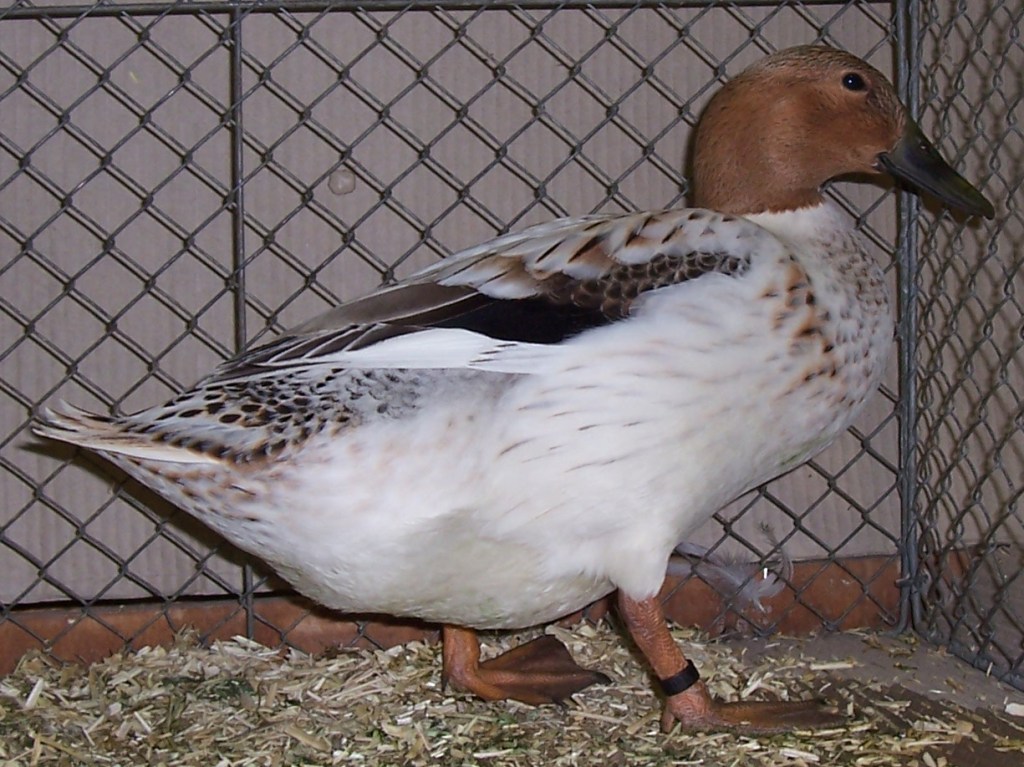
y Paul-Erwin Oswald, CC BY 3.0
Abacot Rangers are medium-sized ducks with an elegant build. Their standard weights are:
- Drakes (males): 3 kg (6.6 lbs)
- Ducks (females): 2.5 kg (5.5 lbs)
With their beautiful markings, excellent egg production, and lively personalities, the Abacot Ranger continues to be a favorite among duck enthusiasts, small-scale farmers, and exhibition breeders alike!

 Caring for your Flock
Leave a comment